

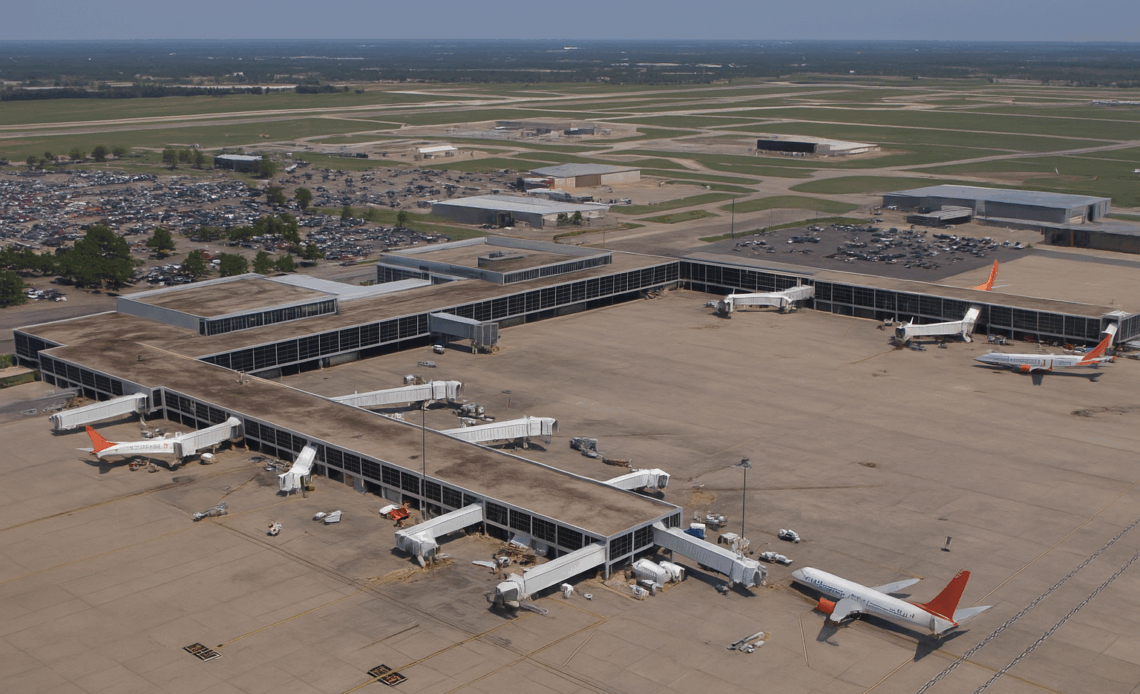
Vertical: Airports
Application: Perimeter security, badging systems, camera surveillance, airfield communications, future AI automation and autonomous vehicle support
Ecosystem: CTS
Private Network: LTE, CBRS
Tulsa International Airport has emerged as a leader among regional airports by implementing a comprehensive private cellular network across its airfield in partnership with Communication Technology Services (CTS). This infrastructure investment addresses longstanding operational challenges while positioning the airport for future technological advancement.
The Oklahoma facility struggled with aging communications platforms supporting critical security functions including badging and camera systems at perimeter entry gates. These legacy systems relied on costly fiber connections or unreliable Wi-Fi networks, creating ongoing operational issues.
Rob Cerbone, Vice President of Marketing at CTS, emphasized the significance of TUL’s investment: “We see TUL as leading the way for smaller and mid-size airports. TUL is forward-thinking by investing in private cellular for improved operations and attracting more technology investments by the airlines.”
The private CBRS-based LTE network delivers high-speed connectivity supporting critical airport functions while laying groundwork for future enhancements including AI-driven automation and autonomous vehicles.
The deployment enhances security by ensuring perimeter surveillance and badging infrastructure operate without interruption while streamlining workflows and reducing operational costs. The scalable network enables TUL to integrate advanced technologies as they become available.
Brent Wall, Director of Innovation and Technology at Tulsa Airports Improvement Trust, noted: “We believe that what TUL is doing will be the model for many small and mid-size airports around the world by investing in their enhanced capabilities now and letting the commercial use cases evolve. By doing so, TUL will be ready to work with the airlines to drive automation through AI and automation for improved operations and enhancing the passenger journey.”
CTS brings experience from successful trials at Minneapolis-St. Paul International Airport, demonstrating private cellular effectiveness across multiple airport use cases including mobile applications, digital signage, and video surveillance.
This deployment establishes a blueprint for regional airports to modernize operations while preparing for future technological demands. The investment demonstrates that smaller airports can position themselves as technology pioneers rather than waiting for larger facilities to lead innovation.